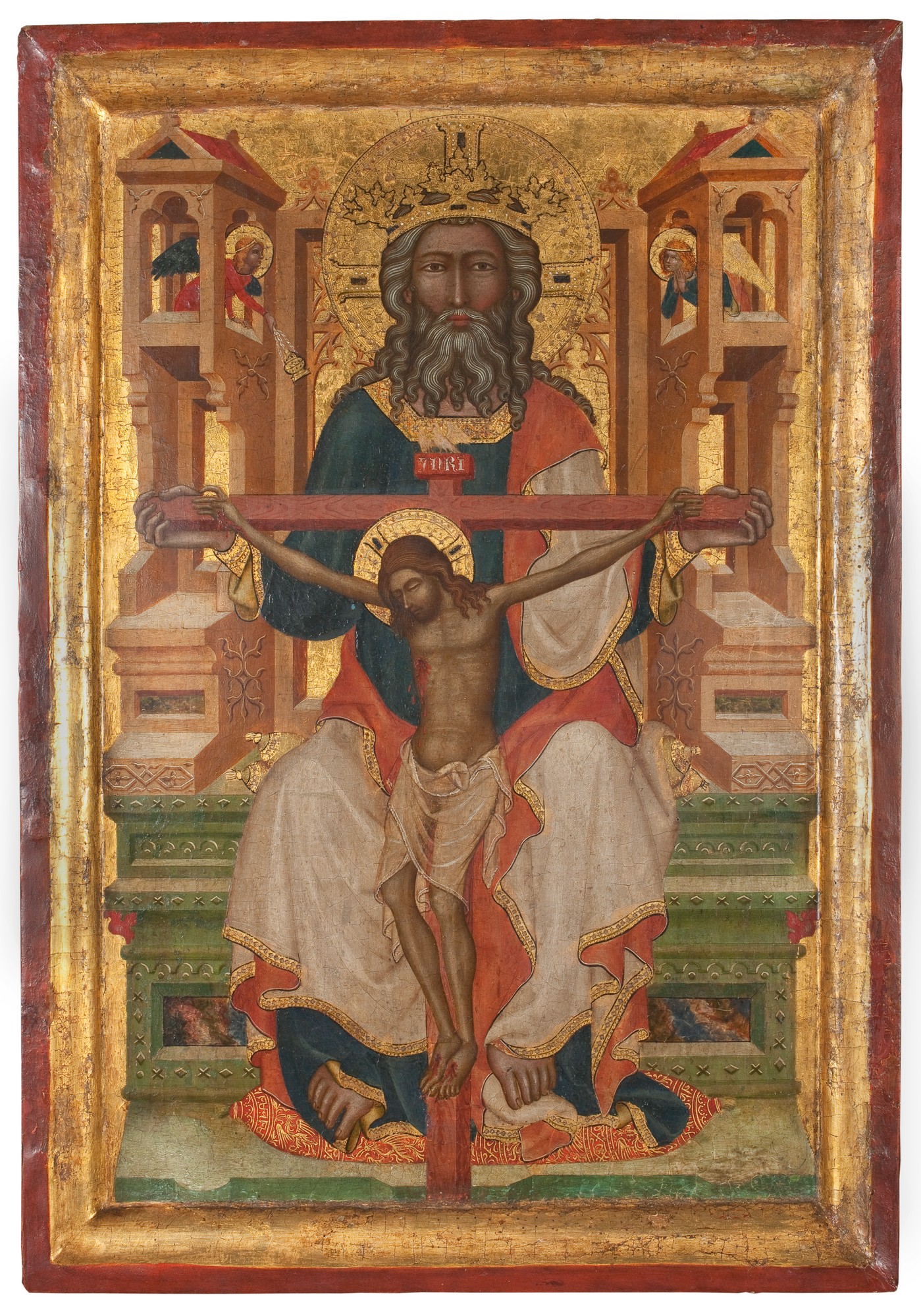
workshop: Workshop of Master of Dormition of the Virgin Mary of Košátky
date: before 1350
place of creation: unknown
place of finding: Świerzawa (Złotoryja County; Lower Silesian Voivodeship), Lower Silesia
object type: picture / painting, part of a retable
material: oak wood, flake gold / gold foil
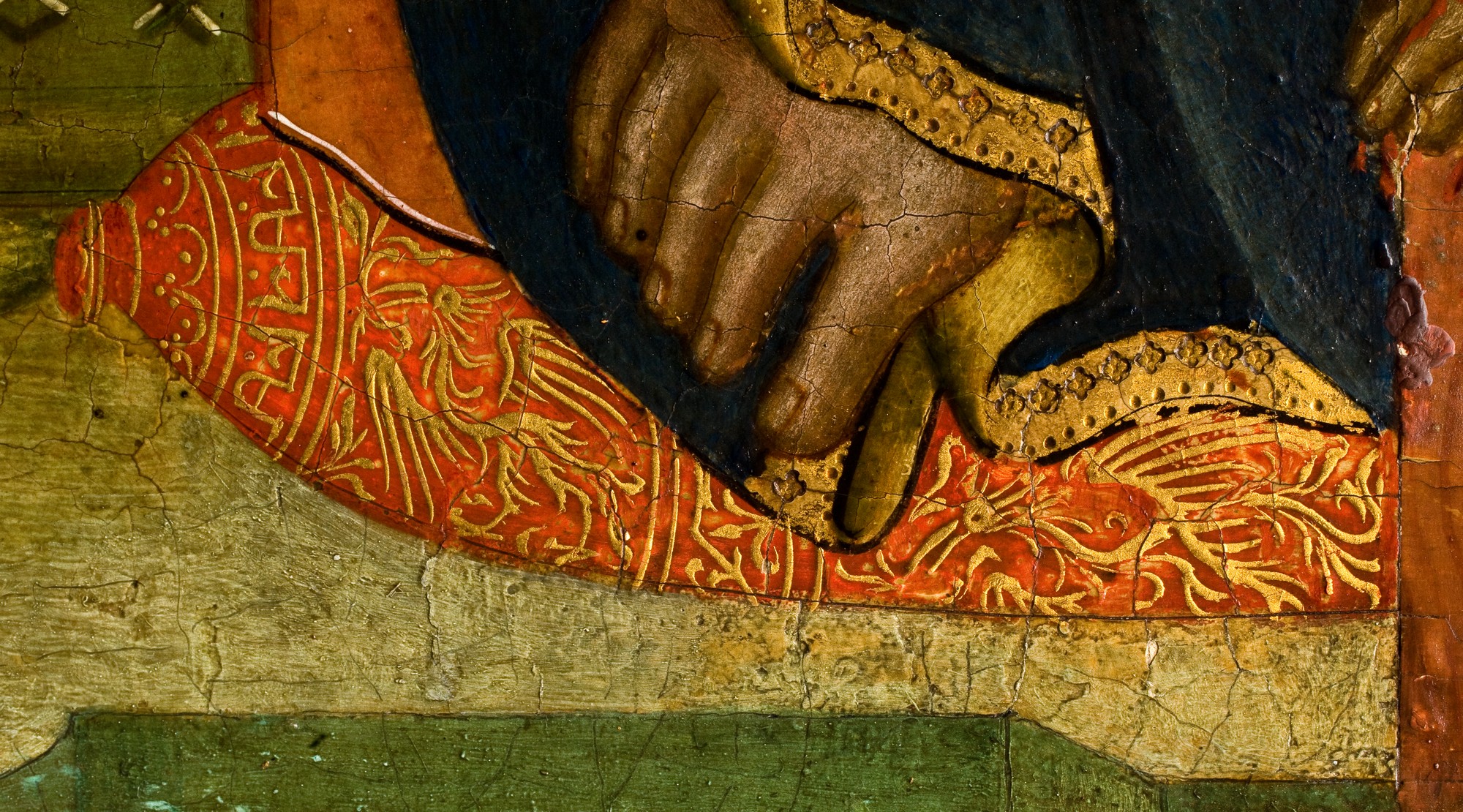
technique: knurling, punching, tempera, gilding
dimensions: H 56.4 x W 38.6 cm
- 19th c. Świerzawa (Złotoryja County; Lower Silesian Voivodeship), place of storage
- 1898-1945 former Archdiocesan Museum in Wrocław / Erzbischöfliches Diözesanmuseum in Breslau, Wrocław (Wrocław County; Lower Silesian Voivodeship), transfer
- 1945-1974 Wawel Royal Castle, Krakow (Krakow County; Lesser Poland Voivodeship), property
- 1964-1974 State Museum in Wrocław; 1950-1970 Silesian Museum; since 1970 National Museum, Wrocław (Wrocław County; Lower Silesian Voivodeship), deposit
- from 1974 State Museum in Wrocław; 1950-1970 Silesian Museum; since 1970 National Museum, Wrocław (Wrocław County; Lower Silesian Voivodeship), property
- Silesian painting and sculpture of the Middle Ages / Schlesische Malerei und Plastik des Mittelalters, Wrocław, 01.08.1926 - 30.10.1926
- Białostocki, Jan, Walicki, Michał, Malarstwo europejskie w zbiorach polskich, Warszawa 1955, Białostocki
- Braune, Heinz, Wiese, Erich, Schlesische Malerei und Plastik des Mittelalters. Kritischer Katalog der Ausstellung in Breslau 1926, Leipzig 1929, s. 77, poz. kat. 167, il.165
- Buchner, Ernst, Schlesische Malerei und Plastik des Mittelalters. Ausstellung in Breslau (August–October 1926), "Zeitschrift für bildende Kunst", z. 8, r. 60, 1926-1927, s. 187
- Deusch, Werner Richard, Deutsche Malerei des dreizehnten und vierzehnten Jahrhunderts. Die Frühzeit der Tafelmalerei, Berlin 1940, s. 14- 25, il. 53
- Dobrowolski, Tadeusz, Sztuka na Śląsku, Katowice 1948, s. 140, il. 65
- Dobrowolski, Tadeusz, Śląskie malarstwo ścienne i sztalugowe do początku XV w., [w:] Historia Śląska od najdawniejszych czasów do roku 1400, red. Władysław Semkowicz, t. 3, Kraków 1936, s. 124, il. XXXVIII
- Ernst, Richard, Beiträge zur Kenntnis der Tafelmalerei Böhmens im 14. und am Anfang des 15. Jahrhunderts, Prag 1912, s. 12, il. XVIII
- Malarstwo XIV i pocz. XV w., red. Anna Fedorowicz, t. I, Wrocław 1964, seria Śląska Sztuka Średniowieczna, s. nlb., il. nlb
- Frey, Dagobert, Schlesiens Künstlerisches Antlitz, "Die Hohe Strasse. Schlesische Jahrbücher für deutsche Art und Kunst im Ostraum", z. 1, 1938, s. 33
- Frinta, Mojmír Svatopluk, Medieval Bohemica: addenda et subtrahenda, "Acta Historiae Artium Academiae Scientiarum Hungaricae", z. 26, 1980, s. 15
- Gottschalk, Joseph, Die älteste Bilderhandschrift mit den Quellen zum Leben der heiligen Hedwig im Auftrage des Herzogs Ludwig I. von Liegnitz und Brieg im Jahr 1353 vollendete, "Aachener Kunstblätter", z. 34, Düsseldorf 1967, s. 158, il. 12, przyp. 158
- Guldan-Klamecka, Bożena, Ziomecka, Anna, Sztuka na Śląsku XII-XVI w. Katalog zbiorów, Wrocław 2003, seria Katalogi zbiorów Muzeum Narodowego we Wrocławiu, s. 207-208, kat. 3
- Jungnitz, Joseph, Zwei Tafelbilder aus der böhmischen Malerschule des 14. Jahrhunderts im Breslauer Diözesanmuseum, "Schlesiens Vorzeit in Bild und Schrift. Zeitschrift des Schlesischen Altertumsvereins, N.F.: Jahrbuch des Schlesischen Museums für Kunstgewerbe und Altertümer", r. 5, 1909, s. 75-76
- Karłowska-Kamzowa, Alicja, Dyptyk księcia Ludwika legnicko-brzeskiego. Ze studiów nad początkami malarstwa tablicowego na Śląsku, "Roczniki Sztuki Śląskiej", z. 7, Wrocław 1970, s.143-146, il. 1
- Karłowska-Kamzowa, Alicja, Fundacje artystyczne księcia Ludwika I brzeskiego. Studia nad rozwojem świadomości historycznej na Śląsku w XIV-XVIII w., Opole 1970, s. 49, 50
- Karłowska-Kamzowa, Alicja, Malarstwo śląskie 1250-1450, Wrocław 1979, s. 24
- Kębłowski, Janusz, Dzieje sztuki polskiej. Panorama zjawisk od zarania do współczesności, Warszawa 1987, s. 43
- Kębłowski, Janusz, Polska sztuka gotycka, Warszawa 1976, s. 192, 194
- Kutal, Albert, České gotícké umění, Praha 1972, s. 57
- Landsberger, Franz, Ein Kapitel schlesischer Malerei, [w:] Kunst in Schlesien, Berlin 1927, s. 206
- Matejček, Antonin, Pešina, Jaroslav, La peinture gothique tcheque 1350-1450, Prague 1950, s. 18, 46, il. 37
- Śląsk – perła w koronie czeskiej. Trzy okresy świetności w relacjach artystycznych Śląska i Czech, red. Andzrej Niedzielenko, Vit Vlnas , Praha 2006, s. 116, poz. kat. 1.4.15
- Nowack, Alfons, Führer durch das Erzbischöfl. Diözesanmuseum in Breslau, Breslau 1932, poz. kat. 124, il. 3
- Otto-Michałowska, Maria, Gotyckie malarstwo tablicowe w Polsce, Warszawa 1982, s. nlb., nr 1
- Pešina, Jaroslav, Česka gotická deskova malba, Praha 1976, s. 14
- Pešina, Jaroslav, Deskova malba, [w:] České uměni gotické 1350-1420, red. Jaroslav Pešina, Praha 1970, s. 215-216
- Pešina, Jaroslav, Desková malba, [w:] Dějiny Českého Výtvarného Uměni od počátku do konce Středověku, t. 2, cz. 1, Praha 1984, s. 355-358
- Pešina, Jaroslav, Die Tafelmalerei, Prag und Böhmen, [w:] Die Parler und der Schöne Stil 1350-1400. Europäische Kunst unter den Luxemburgern. Ein Handbuch zur Ausstellung des Schnütgen-Museums in der Kunsthalle Köln, red. Anton Legner, t. 2, Köln 1978, s. 758, il. nlb
- Schmidt, Gerhard, Malerei bis 1450, Tafelmalerei – Wandmalerei – Buchmalerei, [w:] Gotik in Böhmen, red. Karl M. Swoboda, München 1969, s. 178, il. 140
- Stange, Alfred, Deutsche Malerei der Gotik, t. 1: Die Zeit vom 1250 bis 1350, Berlin-München 1924, s. 182, il. 182
- Stejskal, Karel, Osobnost mistra emauzskěho cyklu, [w:] Gotyckie malarstwo ścienne w Europie środkowo-wschodniej. Materiały konferencji naukowej Instytutu Historii Sztuki (Poznań 20-23 X 1975), Uniwersytet im. Adama Mickiewicza w Poznaniu, red. Alicja Karłowska-Kamzowa, cz. 8, Poznań 1977, seria Seria Historia Sztuki, s. 73-74
- Troche, Ernst Günter, Das erste Jahrhundert schlesischer Tafelmalerei, "Die Hohe Strasse. Schlesische Jahrbücher für deutsche Art und Kunst im Ostraum", z. 1, 1938, s. 104-106, il. nlb.
- Wojturski, Grzegorz, Sztuka Śląska XII-XVI w. Muzeum Narodowe we Wrocławiu. Przewodnik., Wrocław 2012, s. 24-25, il. s. 25
- Ziomecka, Anna, Śląskie malarstwo gotyckie. Zbiory Muzeum Narodowego we Wrocławiu, Wrocław 1986, s. 28-30, poz. kat. 1
provenance: 1974, transfer
National Museum in Wrocław Gallery of Art 12th–15th c.
inventory number: MNWr XI-341